
Looking for the best speed puzzling tips to help you play jigsaw puzzles in the newest team format? The Speed Puzzling Pairs Relay is the most exciting addition to the competitive circuit. It is a game of high stakes and high speed. This format is not just about how fast your fingers move. it is about how well you communicate with your partner under pressure.
The Core Rules of the Speed Puzzling Pairs Relay
In a Speed Puzzling Pairs Relay, teams of two must switch puzzles every 5 minutes. The rules are very strict about this transition. When the timer dings, the active player must step away immediately. The second player takes the seat and begins their heat.
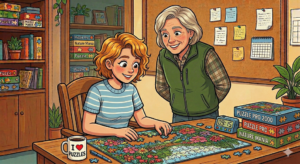
The most important rule is the coach but don’t touch strategy. When you are the off player, you are still in the game. You stand behind your partner. You can see the whole board. You can point at sections. You can whisper directions. But you must never touch a piece. If your finger hits the cardboard while you are the coach, your team will face a time penalty.
Table of Contents
Mastering the Hand Off Sync
The key to winning the Speed Puzzling Pairs Relay is the Hand Off Sync. Most teams lose ten to fifteen seconds during every switch. They spend that time scanning the board. They try to figure out what their partner was doing. You can avoid this by using the pointer piece method.
As the active player, your job is to set up your partner for success. In the final thirty seconds of your five minute heat, stop working on complex clusters. Instead, find three or four pieces that have a very obvious home. Place these pieces halfway into their slots. These are your pointer pieces.
When the switch happens, your partner does not have to scan. They see the pointer pieces immediately. They click them into place. This gives them instant momentum. It creates a psychological win that carries through their entire five minute sprint.
Missy’s Speed Puzzling Lab Notes
I recently ran a relay with a new partner. We practiced the Hand Off Sync until it was muscle memory. During the third switch, she was struggling with a dark forest section. I stood behind her as the coach. I did not touch the board. I simply whispered the shapes she needed to find. I watched for the knobs and holes.
Because I had the bird’s eye view, I saw the patterns she missed while she was up close. When it was my turn to sit down, she left me four pointer pieces in the sky section. I sat down and clicked them in three seconds. We did not waste a single moment. That is how you win a Speed Puzzling Pairs Relay.
Preparing for the Puzzle Competitions
To win at this level, you must treat your partner like a teammate in a sport. You need to know their strengths. If your partner is better at borders, let them start. If you are a master of color gradients, take the middle heats. Use your time as a coach to keep the trays organized. A clean workspace is a fast workspace.
The Speed Puzzling Pairs Relay is won in the margins. It is won in the five seconds during the switch. It is won in the words you whisper as a coach. Keep your head clear. Keep your hands ready. And always leave a pointer piece.
Can we talk to each other while we play jigsaw puzzles in this format?
Yes. You are encouraged to talk. The rules allow full verbal coaching. You can tell your partner which piece to look for. You can describe the colors. You can even point at the board. Just remember that the off player must never make physical contact with the cardboard. Use your words to keep the momentum high.
What is the penalty for touching the board out of turn?
The penalty is usually a time addition. Most puzzle competitions will add ten to thirty seconds to your final score for every touch violation. This might not sound like much. But in a fast race, thirty seconds is the difference between first place and fifth place. Keep your hands behind your back to avoid a mistake.
Should the faster player go first or last?
This is a great question for your team strategy. I usually suggest that the better sorter goes first. The first five minutes are all about flipping pieces and finding the border. If you are a master of the early game, take the first heat. If you are better at the final crunch, take the last heat. Use your speed puzzling tips to play to your individual strengths.
How do I make a pointer piece easy to see?
A pointer piece should be left halfway in its slot. Do not push it all the way down. You want it to stand out from the rest of the board. This creates a clear visual target for your partner. It tells them exactly where to start. It is a small gesture that shows great affection for your teammate. It makes the switch feel like a victory.
What if my partner gets stuck during their heat?
Do not panic. This is why the coach but don’t touch rule exists. If your partner is struggling, use your voice to calm them down. Help them find a specific shape. Remind them to check the trays you organized. Your support is just as important as your speed. A steady team is a winning team.